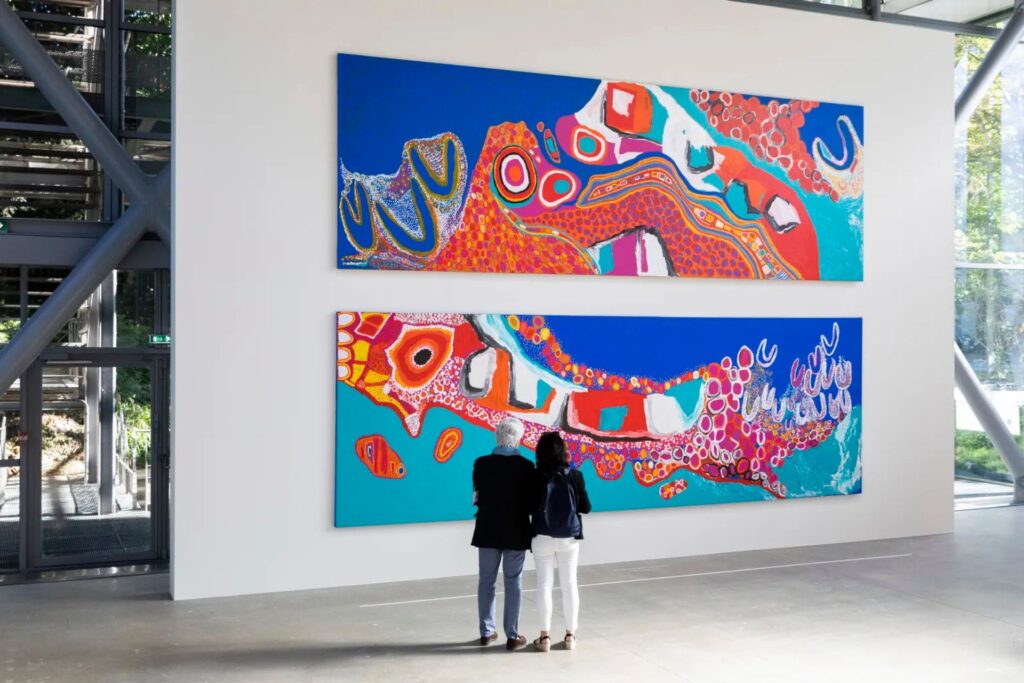
Founded in 1984 by Alain Dominique Perrin, then-President of Maison Cartier, the Fondation Cartier pour l’art contemporain has since exhibited artists from every creative field, breaking down boundaries between art forms and intellectual disciplines. Today, the Fondation carries out its activities in France and around the world with a clear vision: to make contemporary creation accessible to the widest possible audience. Through exhibitions, talks, live performances, and long-term collaborations with cultural institutions, it continues to build bridges between creative communities and foster international dialogue.

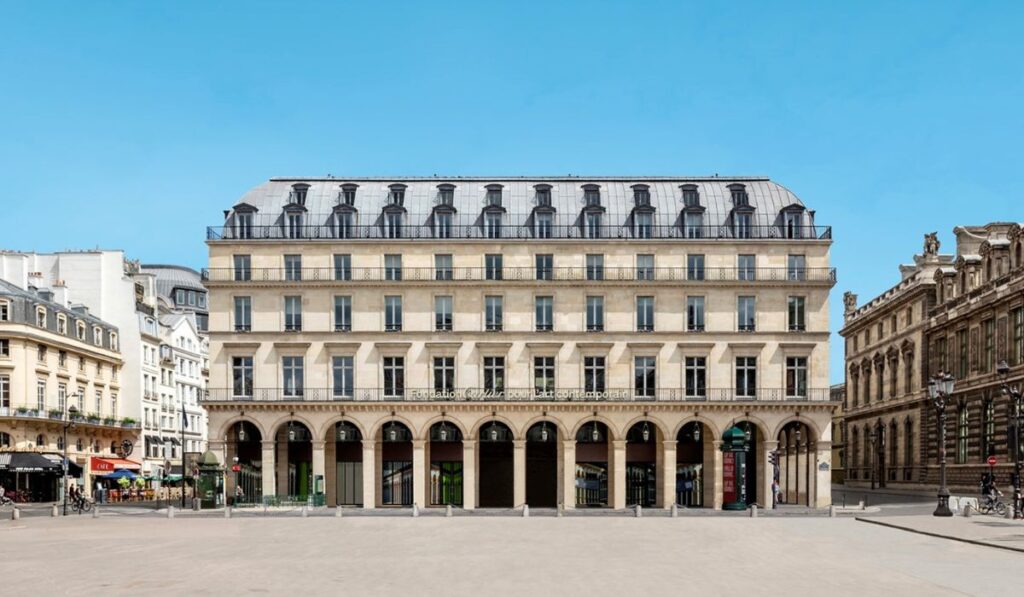
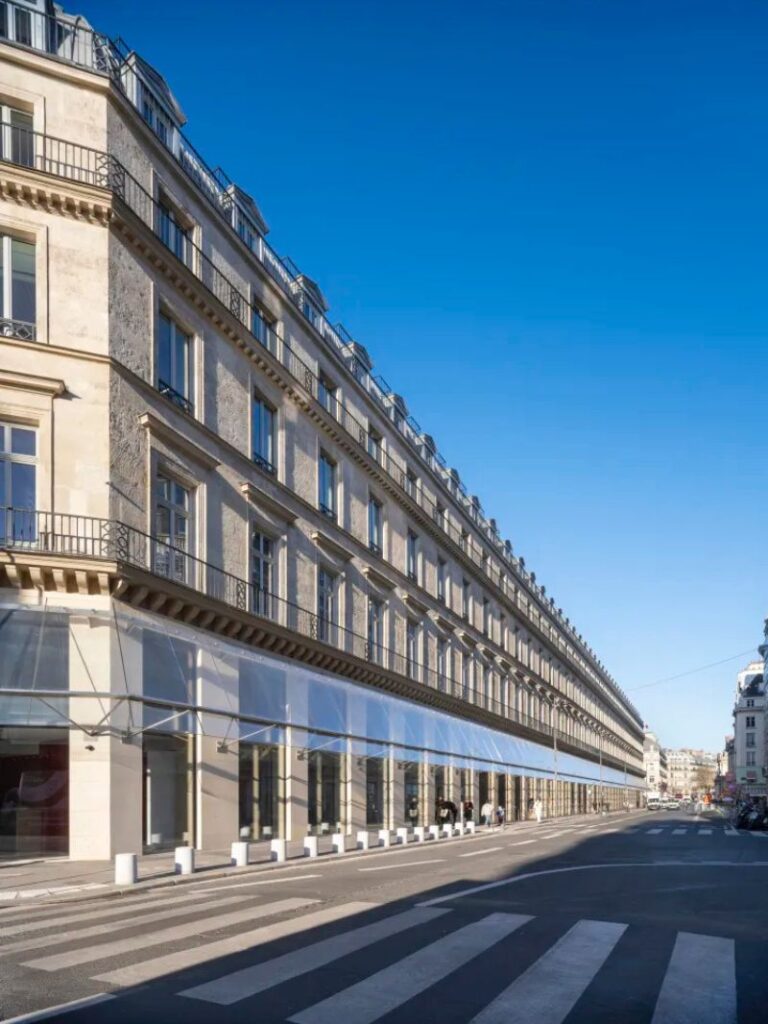
On Saturday, October 25, the Fondation Cartier is moving. After decades in its iconic glass building on Boulevard Raspail, it relocates to one of Paris’s most emblematic addresses: 2, Place du Palais-Royal. In the heart of the city, just across from the Louvre, this 19th-century landmark has been reborn through Jean Nouvel’s visionary redesign.

The new space will remain true to the Fondation’s mission: to serve as an open stage for contemporary creation. At the same time, it honors the architectural and urban traditions of Paris, combining historic grandeur with a bold new vision for space, light, and movement.

The story of the building begins in the 19th century, when Baron Haussmann oversaw the expansion of the famous Rue de Rivoli. Built in 1854–1855, it once housed the Grand Hôtel du Louvre and the Grands Magasins du Louvre, which defined the social life of central Paris for decades. Under Nouvel’s direction, the building regains its original brilliance, bringing to life the modern historicism of its era and opening a dialogue between the old and the new.

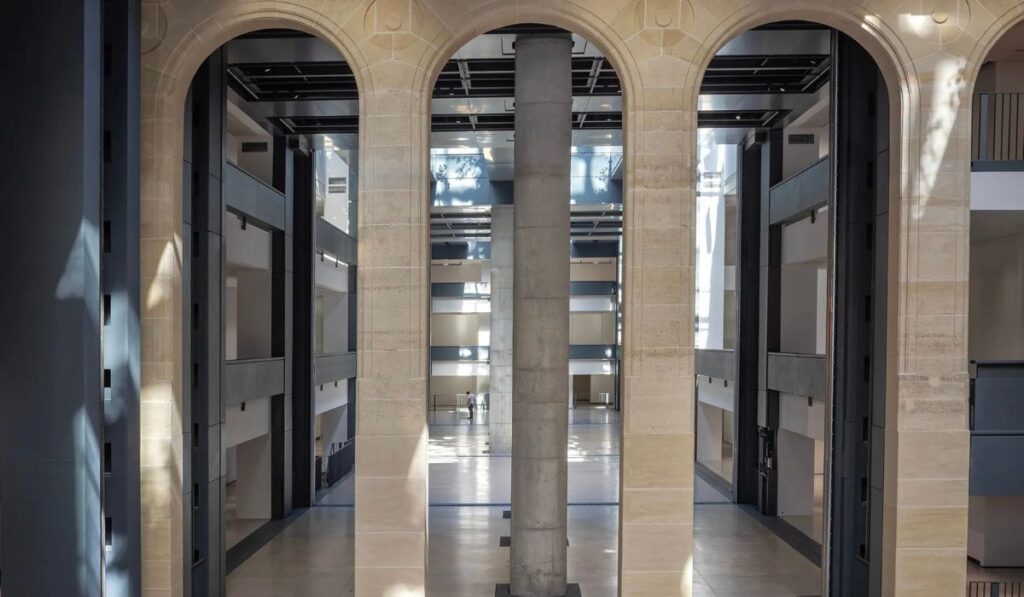
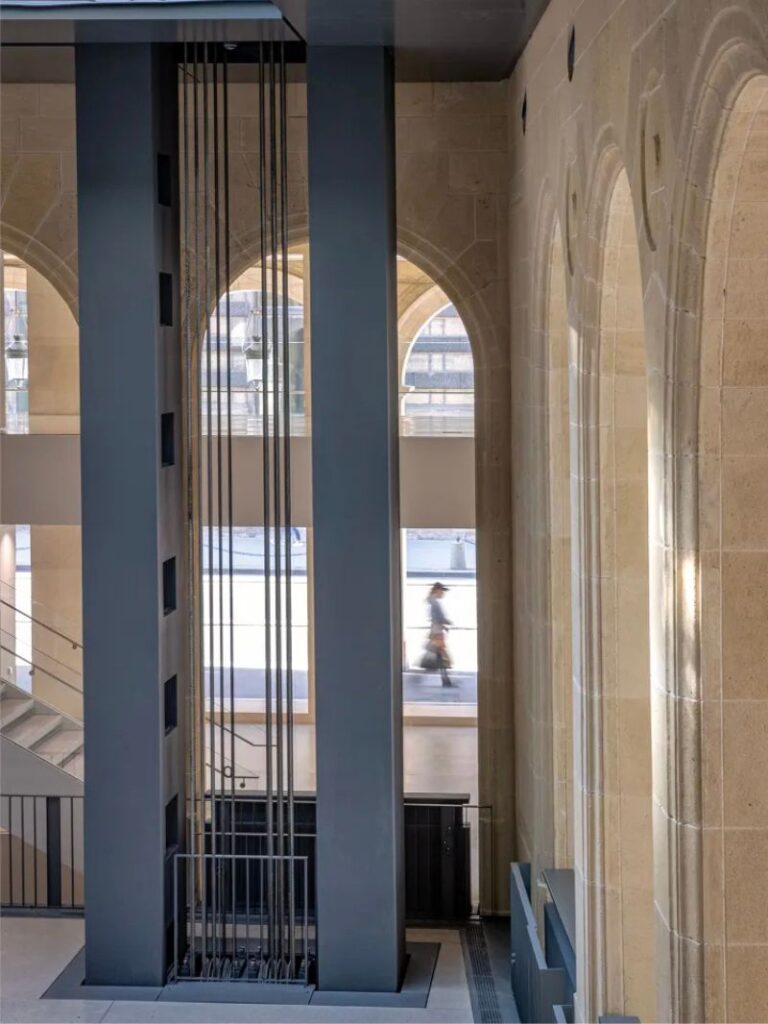
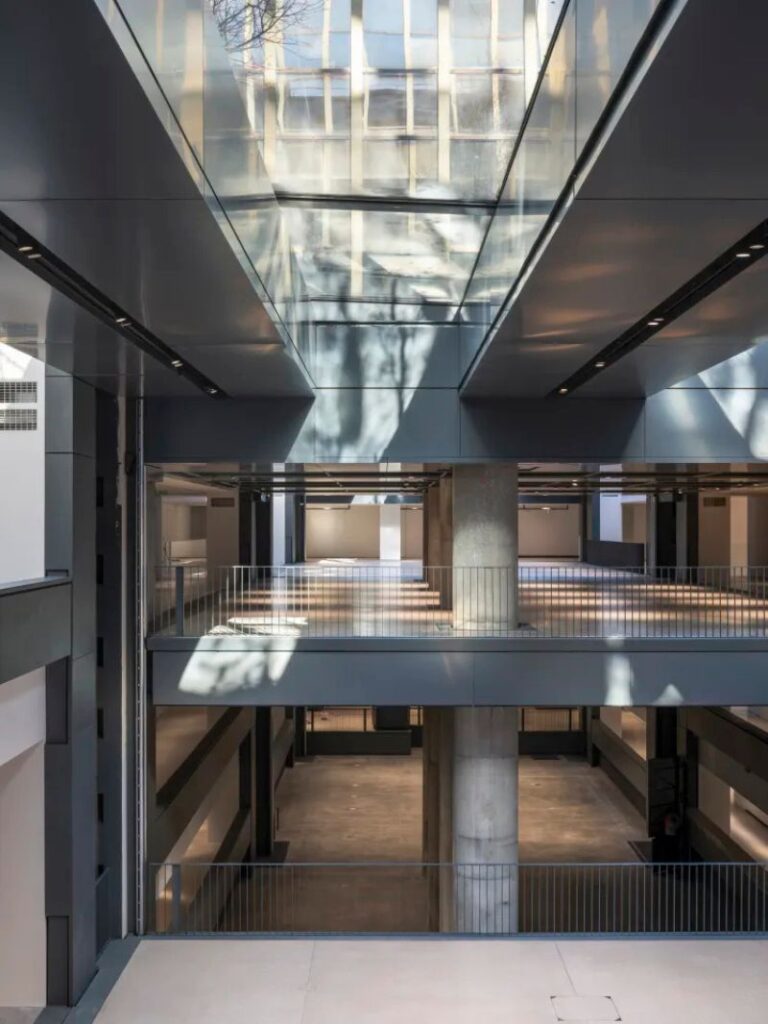
In 2013, Jean Nouvel was commissioned to redesign the interior with the goal of creating a “living” museum. “We must gain space from above, below, and through the transversalities of the building,” he noted. From that idea emerged a futuristic concept: a vast inner “machine” with massive moving platforms that rise and fall beneath glass ceilings. A mechanical marvel at the heart of a listed monument.

With four entrances and a total surface area of 8,500 square meters, 6,500 of which are dedicated to exhibitions, the building offers a new architectural landscape where eras and styles coexist and converse.

At the core of the new Fondation Cartier, five adjustable platforms ranging from 200 to 300 square meters each define the scenography of every exhibition. Their varying heights create a living organism that adapts to each artwork, each narrative. Behind the preserved façade, Nouvel’s dynamic architecture generates unexpected perspectives; a museum that changes its face with every shift of light, sound, or time of day.

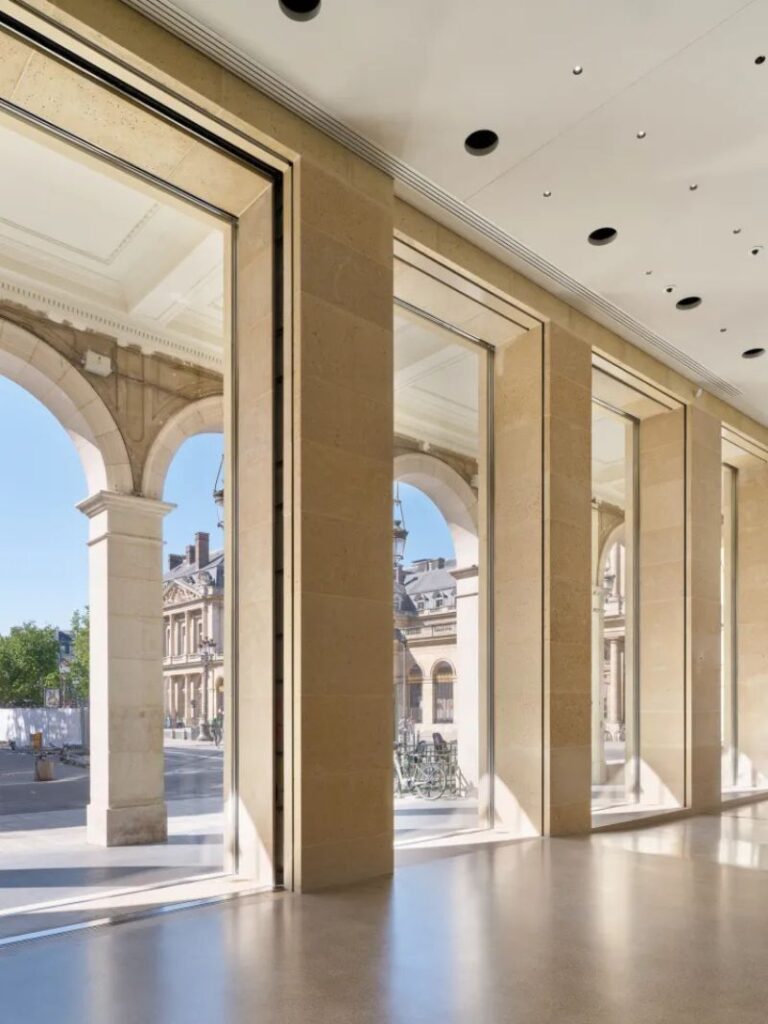
Retractable ceilings, mechanical guardrails, and sweeping glass façades compose a space where technology meets the poetic atmosphere of 19th-century Paris. Light penetrates every corner, recalling the city’s historic arcades and inviting passers-by into a complete visual experience. A new glass canopy, inspired by those that once adorned Rue Saint-Honoré and Rue de Marengo, unifies the street, the arcades, and the exhibition spaces into a single fluid continuum.
With its rebirth at the Palais-Royal, the Fondation Cartier is not only redefining its own identity, it is also giving art lovers around the world one more reason to visit Paris.
Watch the video…