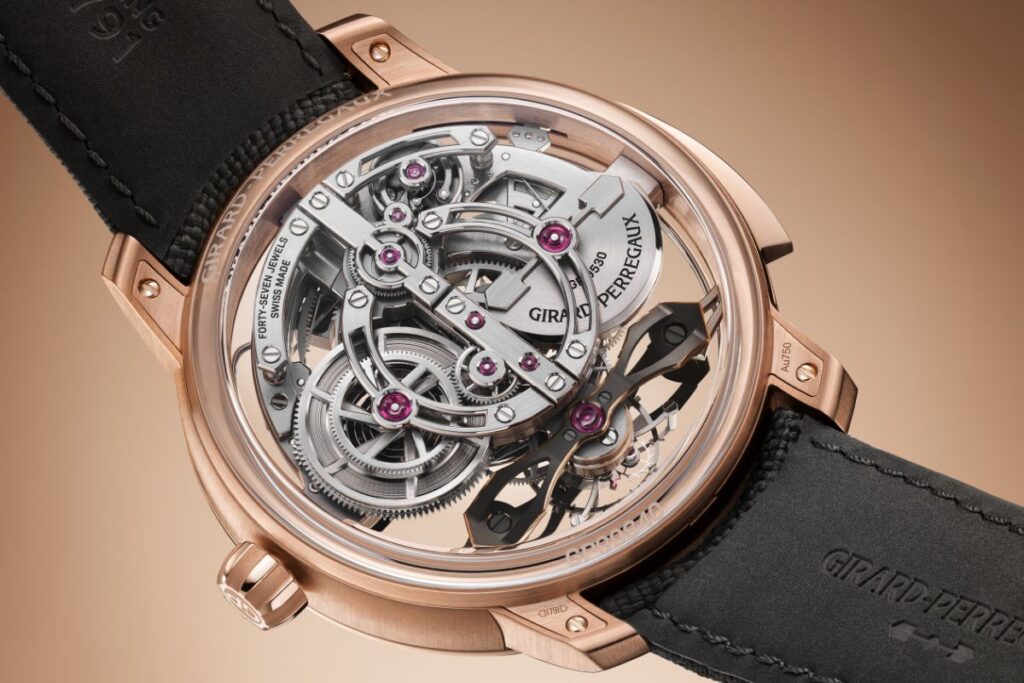
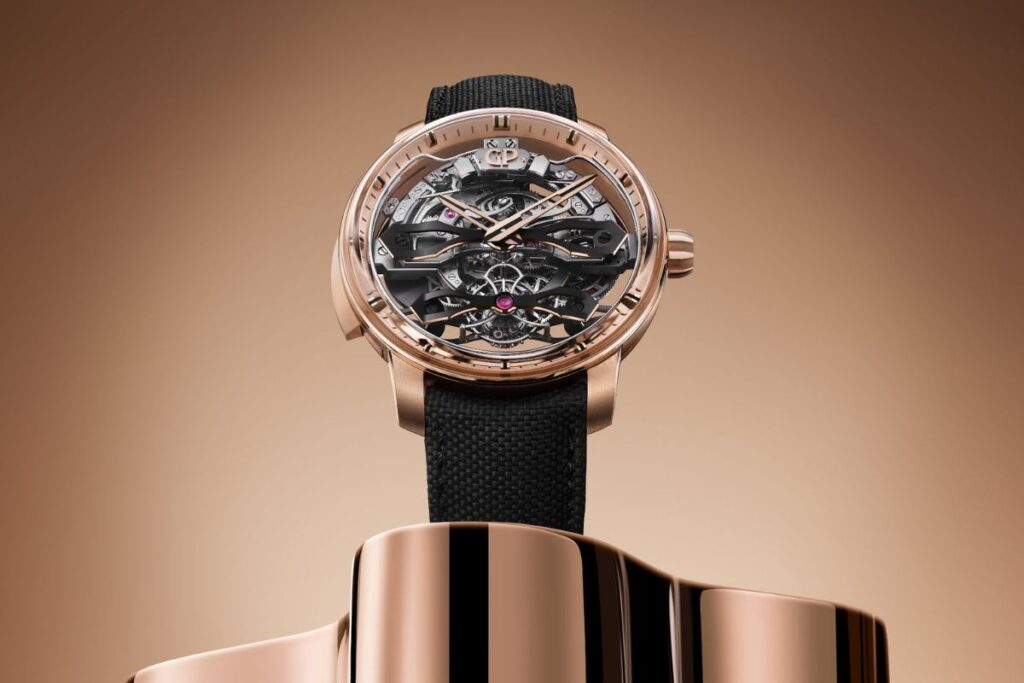
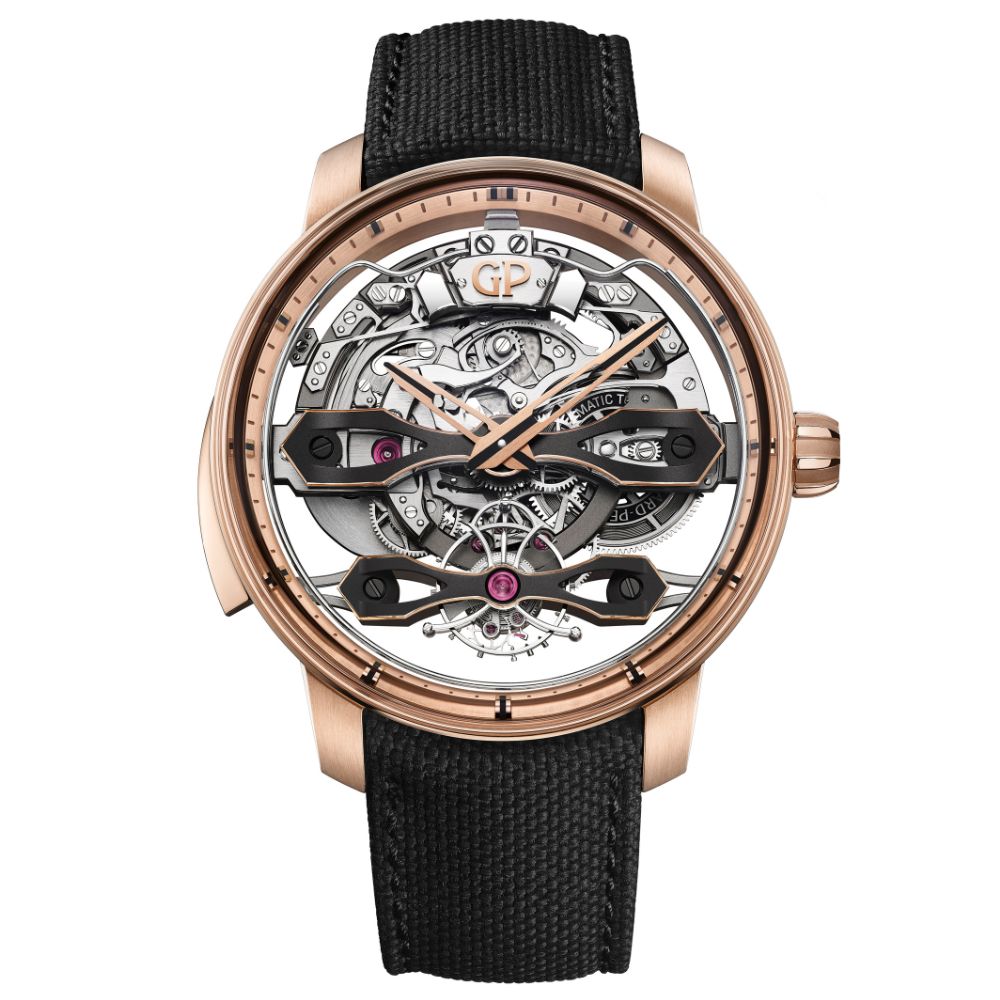
The minute repeater, a complication that has been a specialty of Girard-Perregaux since as far back as 1820, returns paired with a flying tourbillon in a skeletonised movement composed of 475 components.
If I had to describe Girard-Perregaux in just two words, I would probably choose something along the lines of “quiet strength.” Because this is a Maison with deep roots in Swiss watchmaking—founded in 1791, yes, you read that correctly—boasting an abundance of credentials, precision awards and at least 80 patents to its name, and yet it has consistently chosen a discreet path, without fanfare or attention-seeking gestures. Clearly, its philosophy is to let its creations, its watches, speak for themselves. In this case, the new Minute Repeater Flying Bridges by Girard-Perregaux does not simply speak—it resonates like a bell. Because it is not just another complicated watch, but a visual and acoustic experience, a unified and harmonious composition of architecture, refined aesthetics and crystalline sound.
Deus ex machina
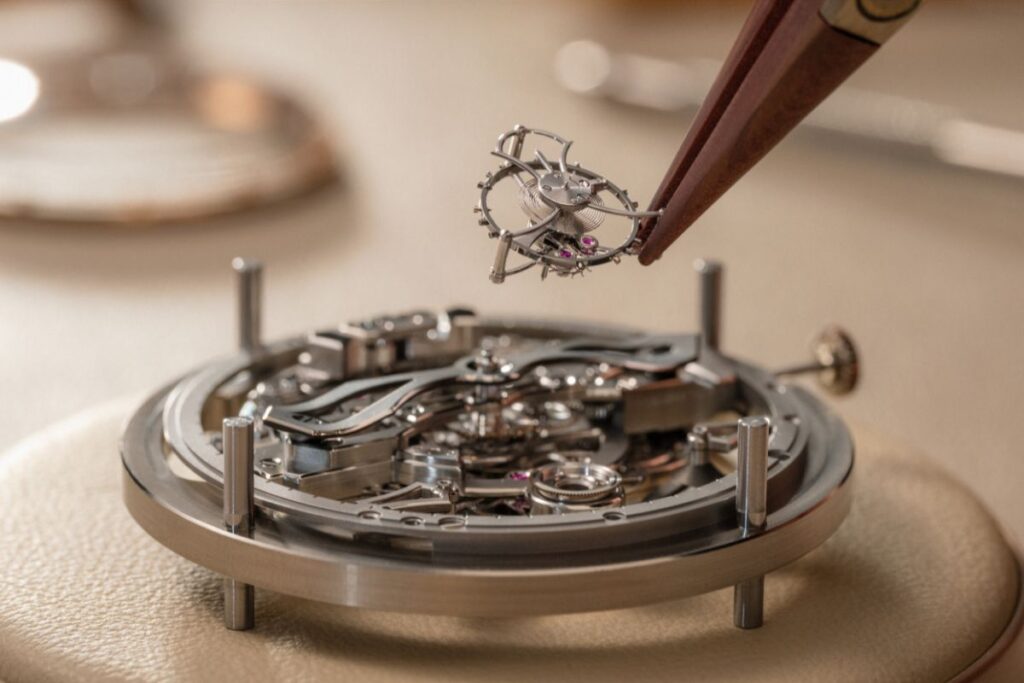
This watch is anything but a simple achievement. Especially when one considers that this is already the third new in-house movement introduced by G-P within just six months, the Calibre GP9530 emphatically confirms the strength of the Swiss Manufacture in a field where technical excellence allows no compromises. Here, the minute repeater coexists with a tourbillon and a self-winding system featuring a micro-rotor, within a movement that, despite its complexity, maintains a remarkable sense of balance and clarity.
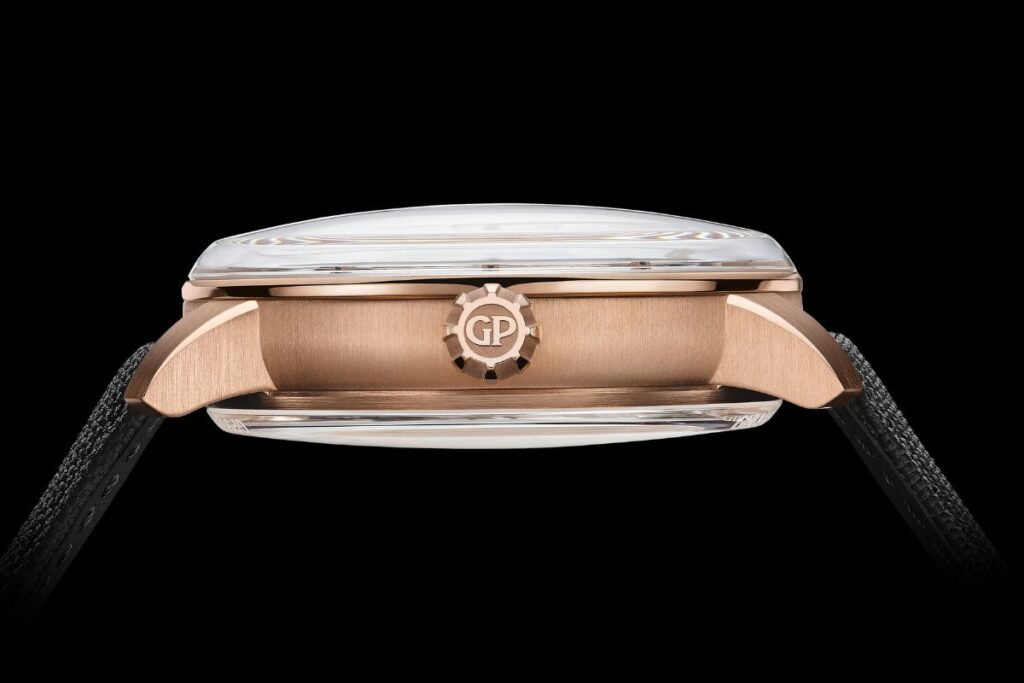
The development of the GP9530 began with a clear objective: the perfection of sound. In chiming watches, sound is not merely a function, but an entire philosophy. Girard-Perregaux treats the transmission and purity of sound as the central axis of its design, selecting materials and technical solutions that serve precisely this goal. The bridges and mainplate, crafted from titanium, act as ideal conductors of vibration, while the direct coupling of the movement to the pink gold case allows sound to diffuse without loss.
The domed sapphire crystals on both the front and back enhance the diffusion of the melody, while the decision to use a single piece of metal for the gongs and their attachment eliminates any possibility of distortion.
Even the white gold micro-rotor has been engineered to operate in complete silence, without interfering with the acoustic experience. The result is a sound that is pure, full-bodied and almost three-dimensional, a sound that does not remain confined within the case, but fills the surrounding space.
An ode to transparency
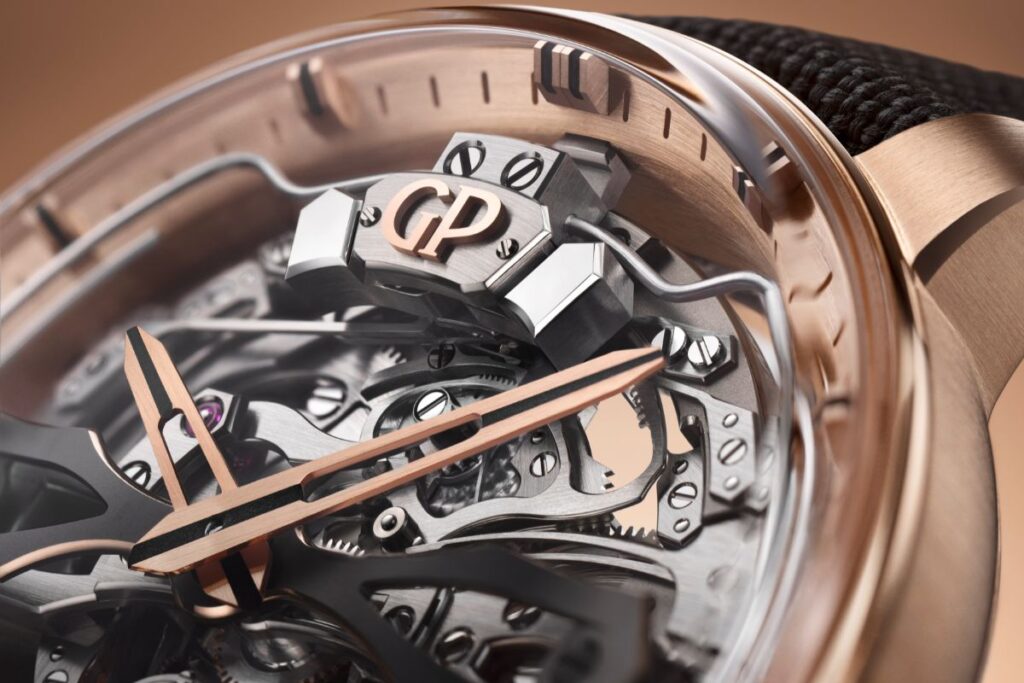
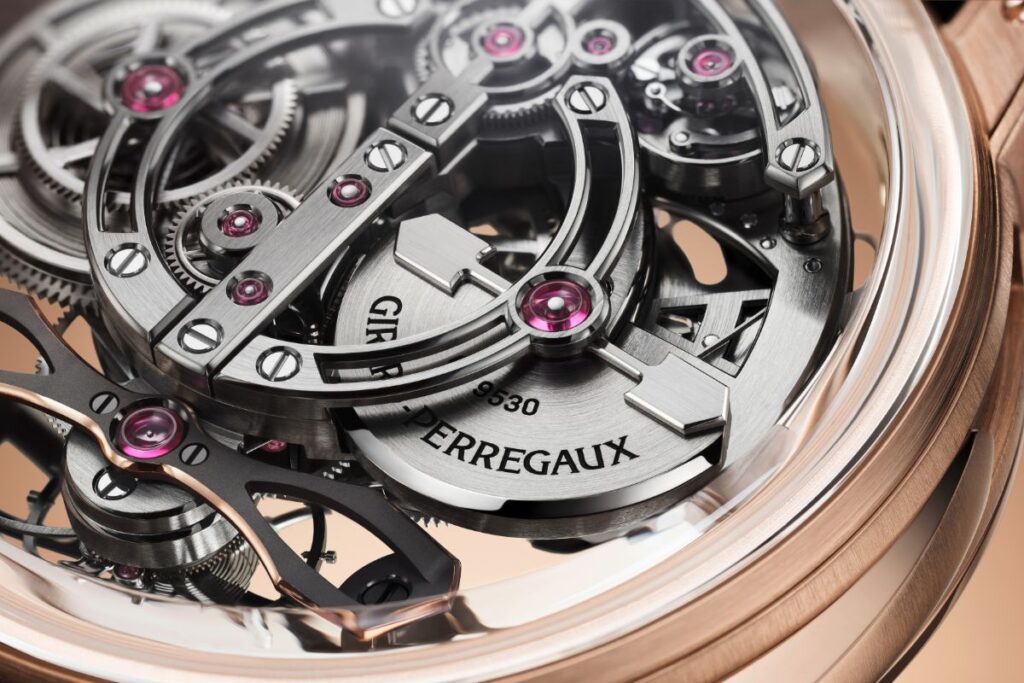
If sound is the soul of the watch, then its architecture is the image that frames it. The GP9530 offers a contemporary interpretation of the iconic Three Bridges layout, a visual signature of Girard-Perregaux since the 19th century. In this version, the construction is fully skeletonised, allowing the eye to travel through the movement. The bridges, with their distinctive arrow-shaped ends, appear to float, while the symmetry of the composition creates a sense of calm within complexity. The tourbillon cage, the chiming mechanism and the winding system are all revealed as if part of a stage where nothing is concealed.
This complete transparency is not merely an aesthetic choice, but a functional one as well. The openworked architecture allows sound to propagate freely, enhancing the performance of the minute repeater. It is a rare instance where form directly serves function—and vice versa.
Despite its high level of complexity, the Minute Repeater Flying Bridges also introduces elements of practicality that are rarely encountered in this category of watches. The automatic winding system with a micro-rotor is in itself a technical challenge, while the new slide-piece, seamlessly integrated into the left side of the case, activates the chiming function without disrupting the overall aesthetic. Equally impressive is the fact that the case ensures water resistance to 30 metres.
The watch features a generous 46 mm diameter and is crafted from 18K pink gold. It wraps around the wrist on a black rubber strap with a fabric-like texture and is secured by a triple-folding clasp in pink gold.
A quick flashback
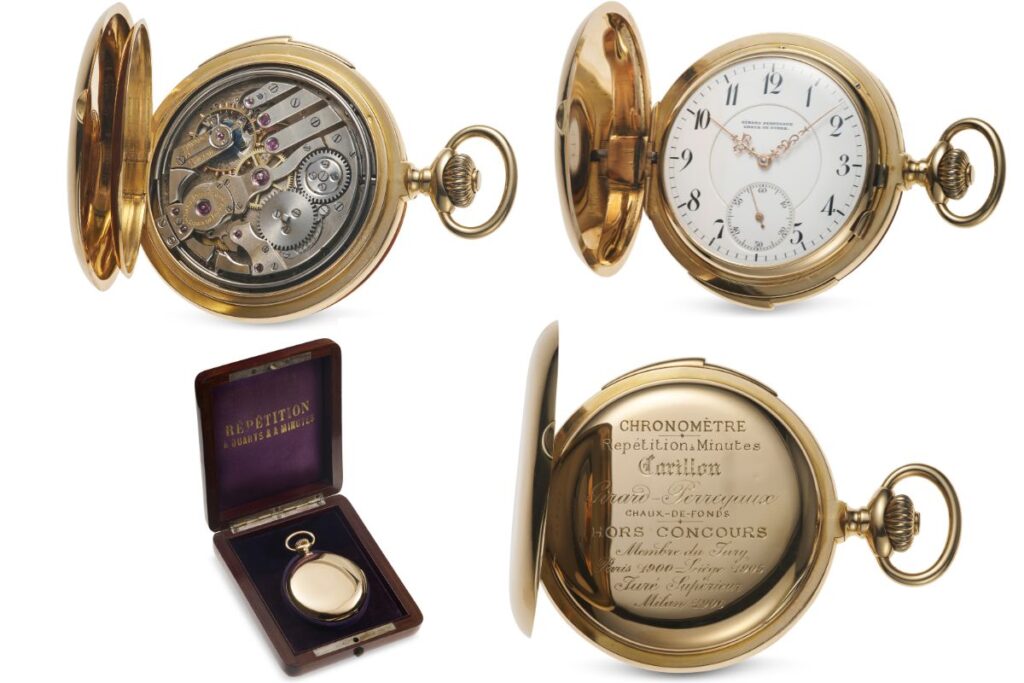
From the late 18th century, when Jean-François Bautte experimented with mechanisms that “sounded” time, to the Grande Sonnerie and Opera models of the 20th century, Girard-Perregaux has cultivated a deep relationship with sound. The GP9530 is simply the modern evolution of this legacy, a fusion of historical expertise and contemporary engineering.
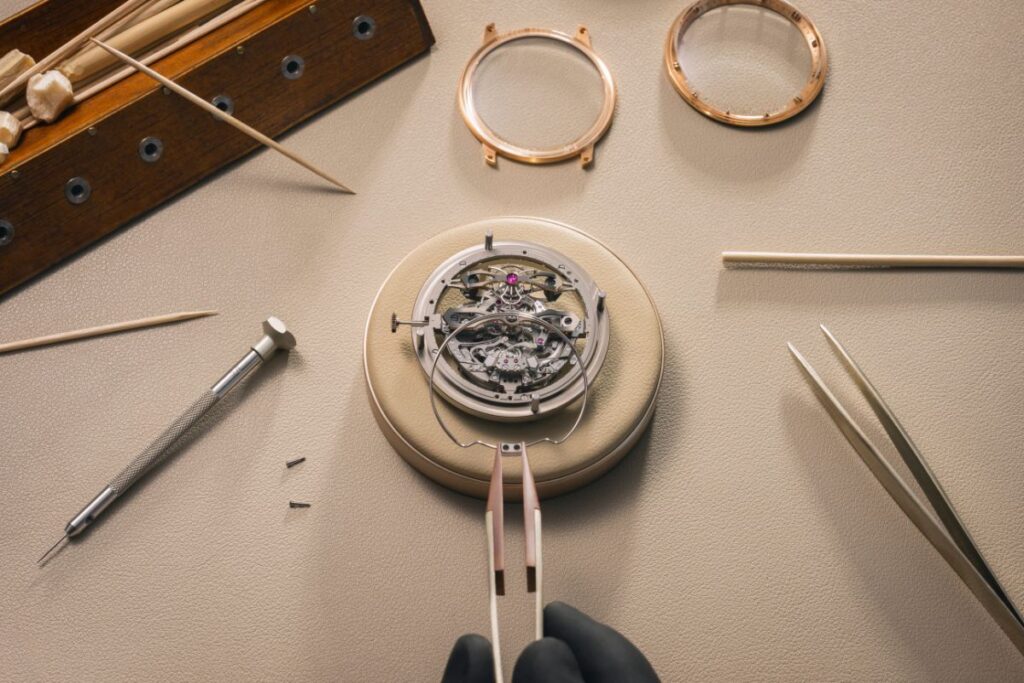
Naturally, the human element could not be absent. The movement consists of 475 components and requires over 440 hours of assembly and finishing. The 1,340 hand-polished angles that catch and reflect the light are not merely a technical accomplishment, but an aesthetic statement. There is also a small, discreet detail worth noting: the initials of the master watchmaker who assembled the timepiece are engraved on the movement, a reminder that behind every such creation stands a human hand.
The Girard-Perregaux Minute Repeater Flying Bridges is clearly not intended for a wide audience. It is a piece of haute horlogerie that seeks its owner among seasoned collectors and connoisseurs of rare mechanical masterpieces. Its price? Around €595,000—just under six hundred thousand euros. As we said, it is not for everyone. Yet we, mere mortals, can at least admire it from afar. And enjoy its crystal-clear sound. For proof, watch—and listen to—the video that follows.
The new HydroConquest collection by Longines returns with cleaner lines, two well-balanced case sizes and meaningful upgrades. A diver that remains true to its
Bvlgari, in collaboration with National Geographic CreativeWorks, has created a documentary titled A Celebration of Color — a dreamlike journey into the heart of
What happens when you remove the very hand that has, until now, confirmed accuracy? Omega makes a decisive move with the Constellation Observatory, its
Now this was a surprise. Independent watchmaker Krayon, known for its uniquely conceived complications, invites us to return to our childhood and… play PAC-MAN.
Exactly half a century after Concorde’s first commercial flight, the Navitimer B01 Chronograph 43 Tribute to Concorde brings together two legends of aviation, capturing
We use cookies to improve your experience on our site. By using our site, you consent to cookies.
This website uses cookies
Websites store cookies to enhance functionality and personalise your experience. You can manage your preferences, but blocking some cookies may impact site performance and services.
Essential cookies enable basic functions and are necessary for the proper function of the website.
Name
Description
Duration
Cookie Preferences
This cookie is used to store the user's cookie consent preferences.
30 days
These cookies are needed for adding comments on this website.
Name
Description
Duration
comment_author
Used to track the user across multiple sessions.
Session
comment_author_email
Used to track the user across multiple sessions.
Session
comment_author_url
Used to track the user across multiple sessions.
Session
These cookies are used for managing login functionality on this website.
Name
Description
Duration
wordpress_logged_in
Used to store logged-in users.
Persistent
wordpress_sec
Used to track the user across multiple sessions.
15 days
wordpress_test_cookie
Used to determine if cookies are enabled.
Session
Statistics cookies collect information anonymously. This information helps us understand how visitors use our website.
Marketing cookies are used to follow visitors to websites. The intention is to show ads that are relevant and engaging to the individual user.
You can find more information in our Cookie Policy and .
Subscribe
About Us
Contact Us
Join our newsletter and get the latest news and articles sent straight to your inbox weekly.