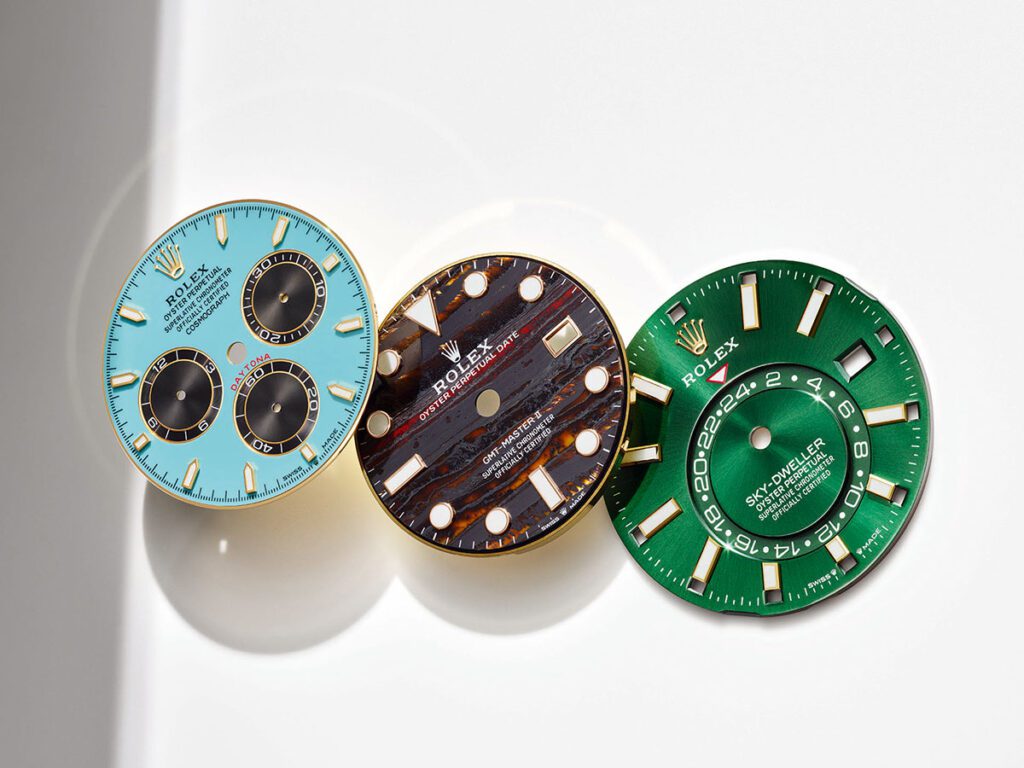
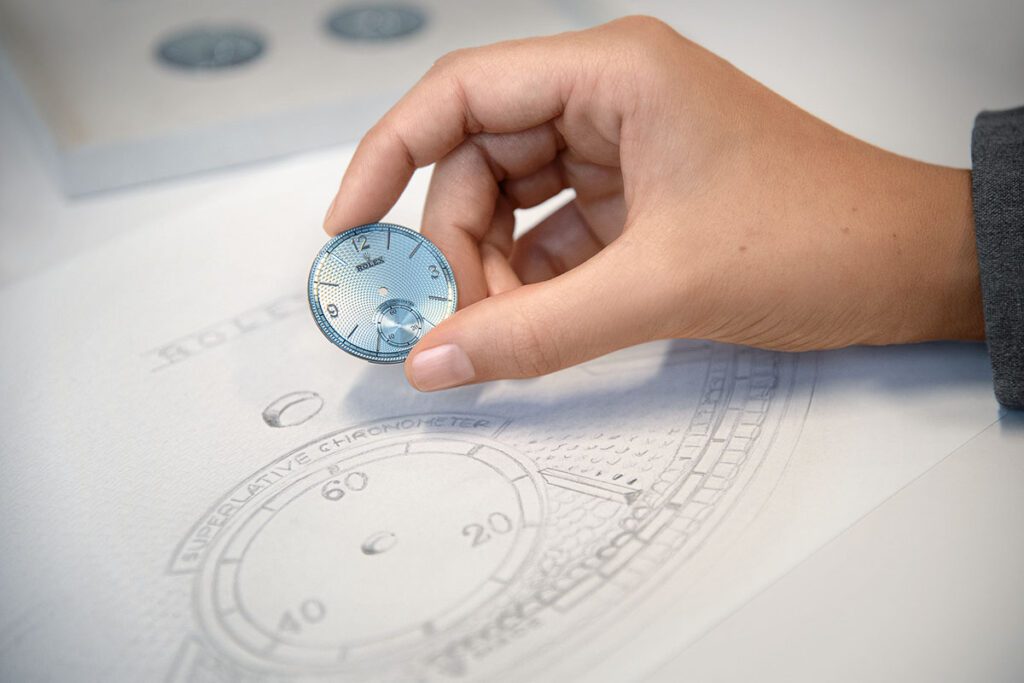
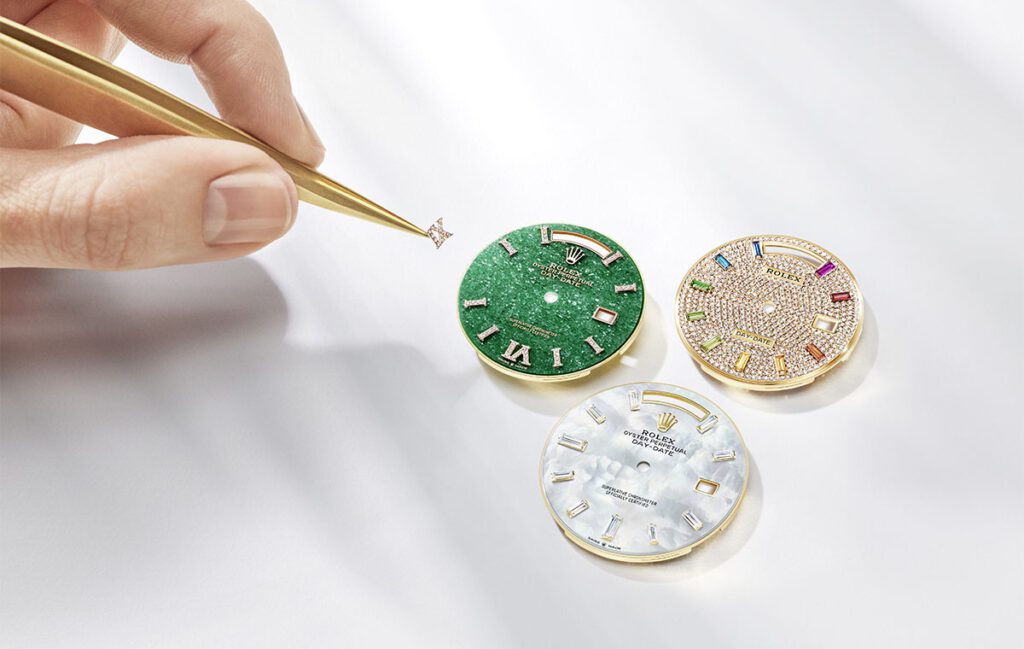
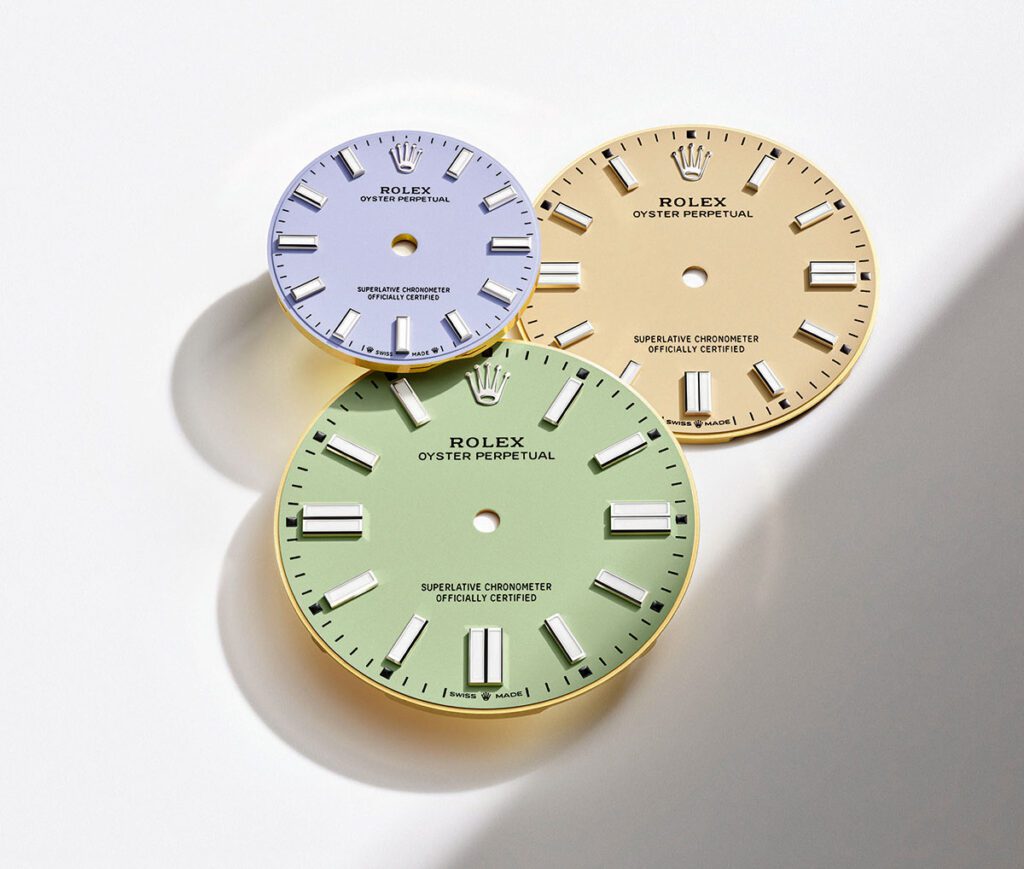
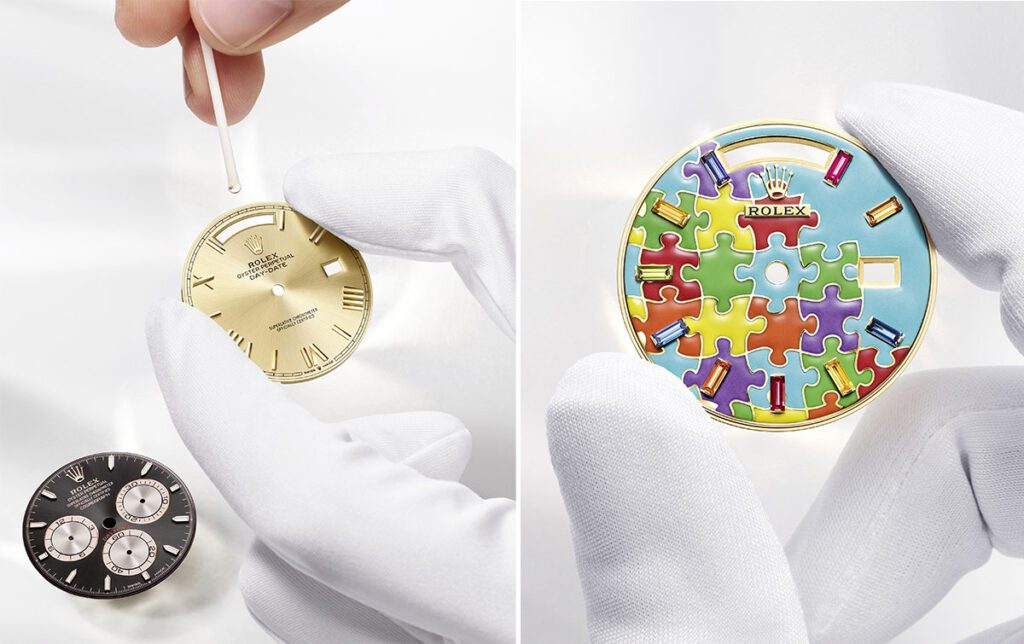
What captures our attention the moment we lay eyes on a watch? Its face. The dial. It’s the display, the showcase, the element that draws our focus before our eyes move to the rest of the piece. The dial helps us perceive and understand a watch’s aesthetics. From the birth of an idea to its realization, crafting a dial demands rare expertise and the merging of two distinct worlds: that of artistic and aesthetic sensitivity with that of scientific knowledge and technical skill. This creative process even has a dedicated term: “art cadranier”. That is why Rolex performs every step of its dial production in-house, in its specialized facilities in Chêne-Bourg, Geneva. There, around 500 people are exclusively employed in dial-making, combining traditional techniques with cutting-edge technologies.
High Expertise
Every year, new dials are born in Rolex’s facilities—products of months-long research and development. They reflect the brand’s evolving stylistic choices and highlight its creative capabilities. Rolex’s vast color palette is constantly enriched with new shades and subtle hues. Over the years, Rolex has amassed deep knowledge and experience in the art of dial-making, continually pushing the boundaries through innovation and testing. It has onboarded a wide array of specialists: artisans, engineers, gem setters, electroplaters, enamel artists, and experts in PVD methods and decorative techniques such as guilloché finishing or sunray effects.
Hundreds of prototype designs are created annually, but only a handful—often countable on one hand—make it into the brand’s official catalog. Naturally, selection is rigorous, based on aesthetic, technical, and commercial criteria. The development of new dials is also an opportunity for innovation. Unsurprisingly, Rolex holds dozens of patents, for example in surface treatments, the construction of appliqué elements, or the morphology of the dial’s base plate.
Tiny Works of Art
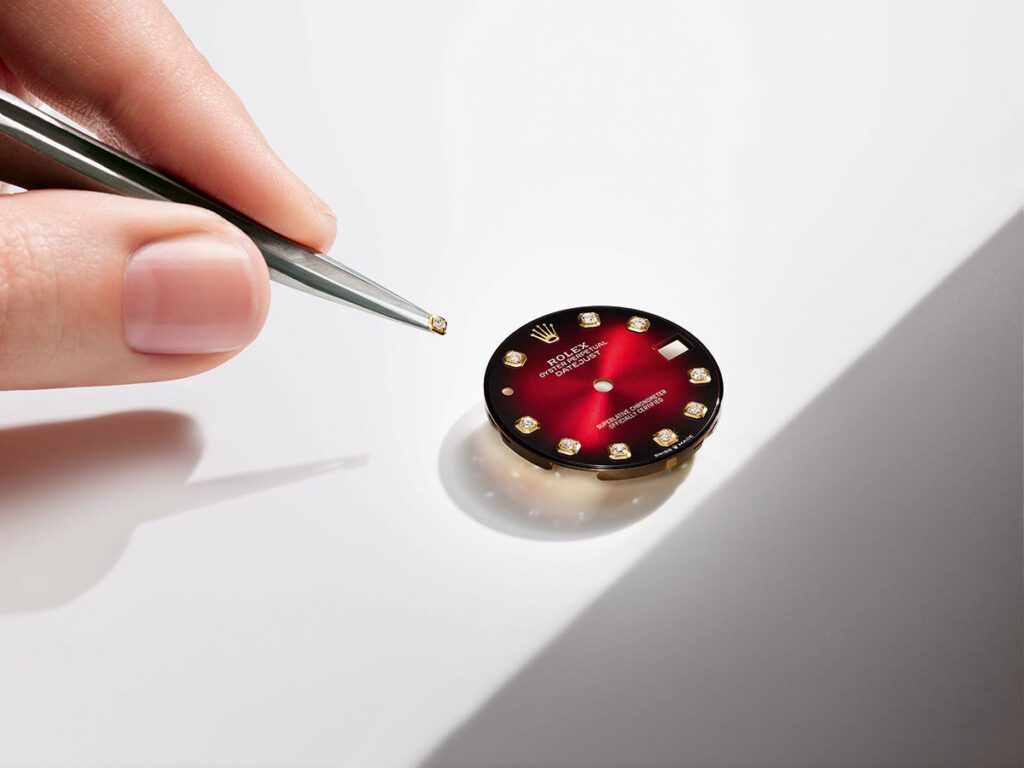
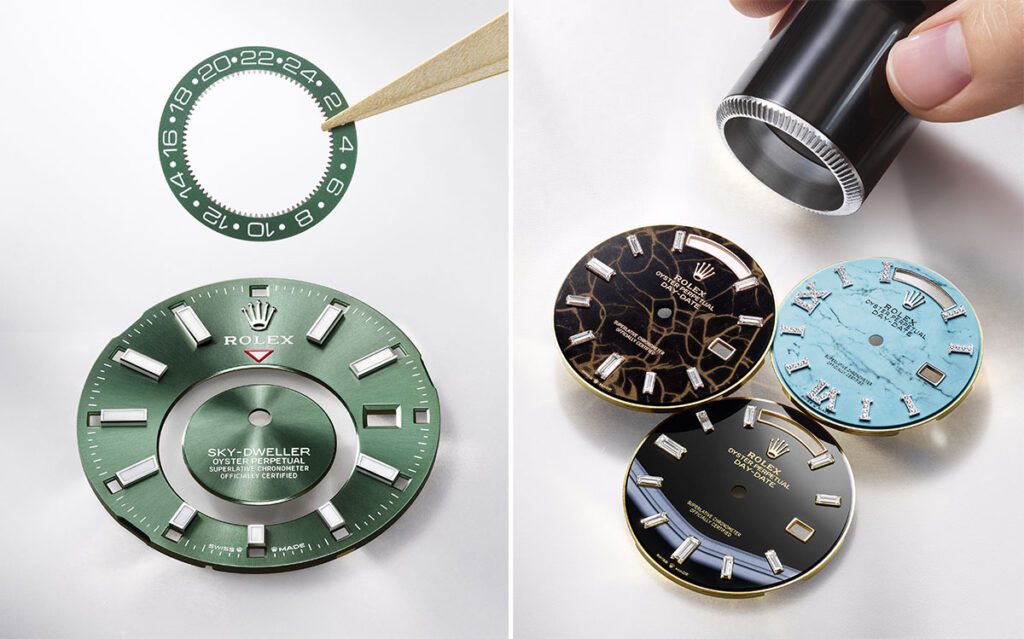
Did you know that transforming a metal disc into a finished dial requires at least sixty different operations? The production begins with small round discs made of brass or gold. Brass is preferred for its workability and conductivity, while gold’s malleability makes it ideal for gemstone-set or enamel dials. Some plates are cut with day and date windows, followed by minute perforations for mounting applied elements—the smallest of which measures just 0.2 mm in diameter. Polishing and then sandblasting smooth the surface and remove any machining marks. The brass dials are then immersed in gold and nickel electroplating baths to create a protective layer against oxidation and ensure the final dial color is evenly distributed and long-lasting. Sunray-finished dials undergo an additional silver-plating bath. Gold dials don’t require such treatments, as gold does not oxidize.
Each dial is a miniature work of art. The color, reflections, and texture of the surface, along with decorative elements and overall design, give the watch its unique character. Beyond brass or gold, Rolex dials may also be made from lacquer or natural materials like mother-of-pearl, or decorative stones such as eisenkiesel, opal, green aventurine, meteorite, carnelian, or turquoise.
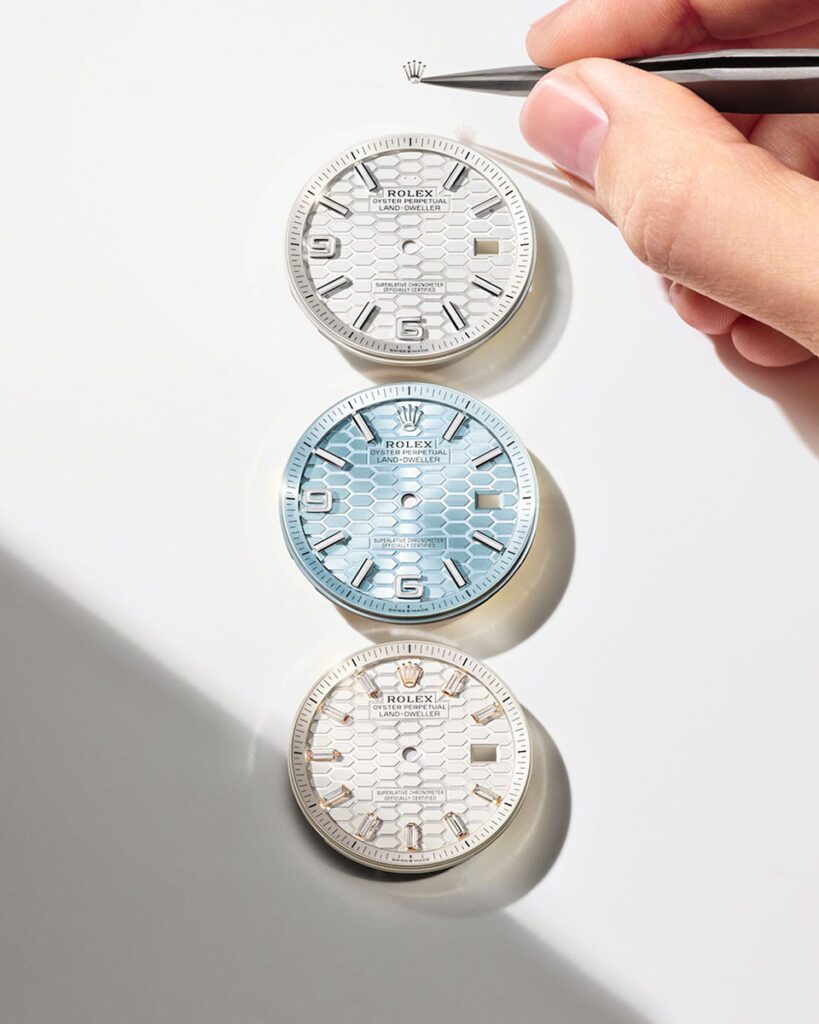
Traditional decorative methods are sometimes employed, such as guillochage or the champlevé technique with grand feu enamel, alongside more modern methods like laser technology for finishes such as grenage, which gives surfaces a granular texture.